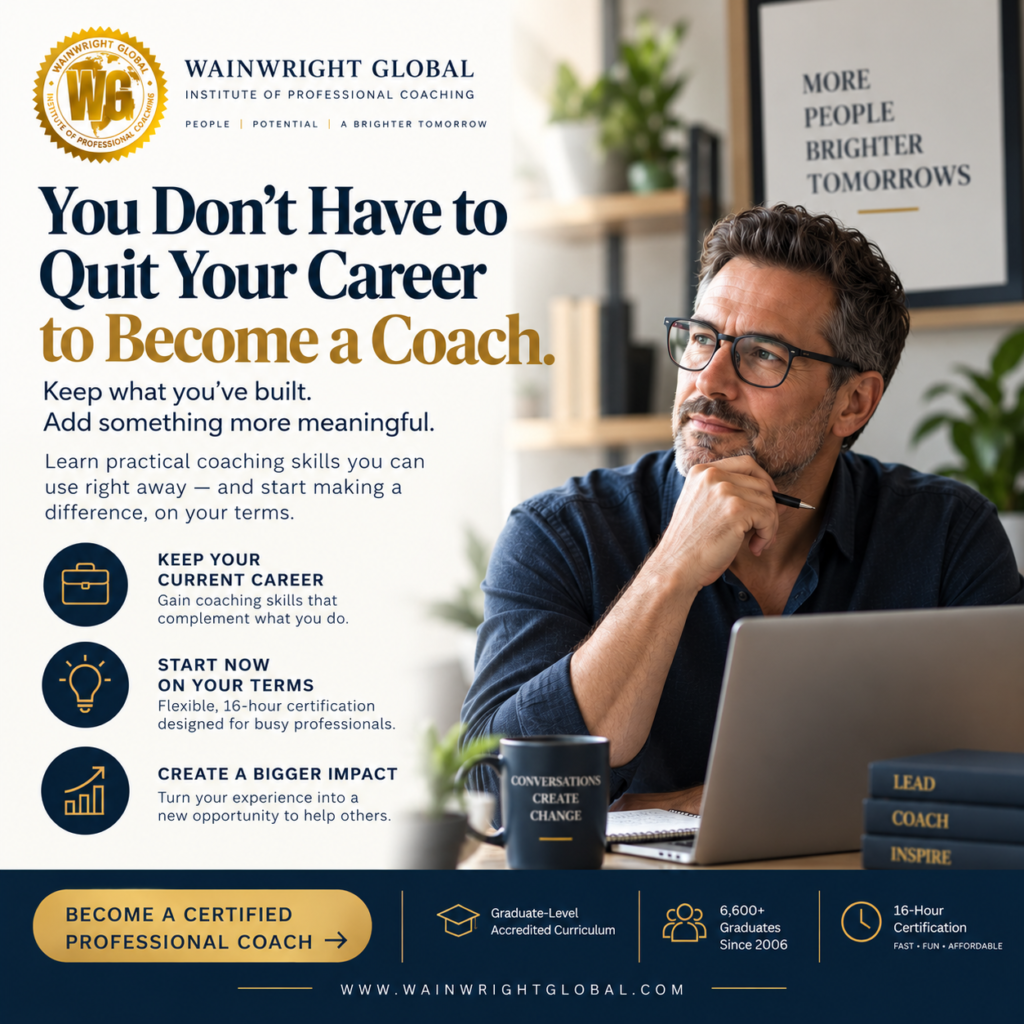
One of the biggest misconceptions about becoming a professional coach is that you have to make a dramatic career change to get started.
You don’t.
In fact, your current career may be one of the greatest assets you bring into coaching.
Start With What You Already Know
Think about the experience you’ve accumulated over the years: leading people, solving problems, navigating difficult conversations, changing careers, building relationships, overcoming setbacks, or simply learning how to listen.
None of that disappears when you become a coach. It becomes part of the foundation you build upon.
Professional coach training adds a different set of skills. Instead of always providing answers, you learn how to ask better questions, listen more intentionally, and help people discover their own path forward.
You Can Start Without Starting Over
Becoming a coach doesn’t have to mean handing in your resignation tomorrow.
You can learn coaching skills while continuing the career you already have. You might initially use those skills to become a better leader, manager, business owner, consultant, or communicator.
From there, you can begin coaching on your own terms and discover where it fits into your future.
Maybe coaching becomes a side practice. Maybe it strengthens the work you already do. Or perhaps, over time, it becomes your next career.
You don’t have to know the final destination before taking the first step.
Your Experience Could Become Someone Else’s Breakthrough
For many aspiring coaches, the question isn’t whether they have enough experience.
It’s whether they’re ready to use that experience differently.
At Wainwright Global Institute of Professional Coaching, our 16-hour certification program provides practical coach training through a graduate-level accredited curriculum. More than 6,600 graduates have completed our programs since 2006.
You’ve already spent years building your experience.
Now you can learn how to turn it into greater impact.
Become a Certified Professional Coach.