
Coaching conversations can be warm, thoughtful, and encouraging, and still feel like they are not going anywhere. One common reason is that the goal is unclear.
A clear goal gives a coaching conversation direction. It helps both the coach and the client know what they are working toward and how to tell whether progress is happening.
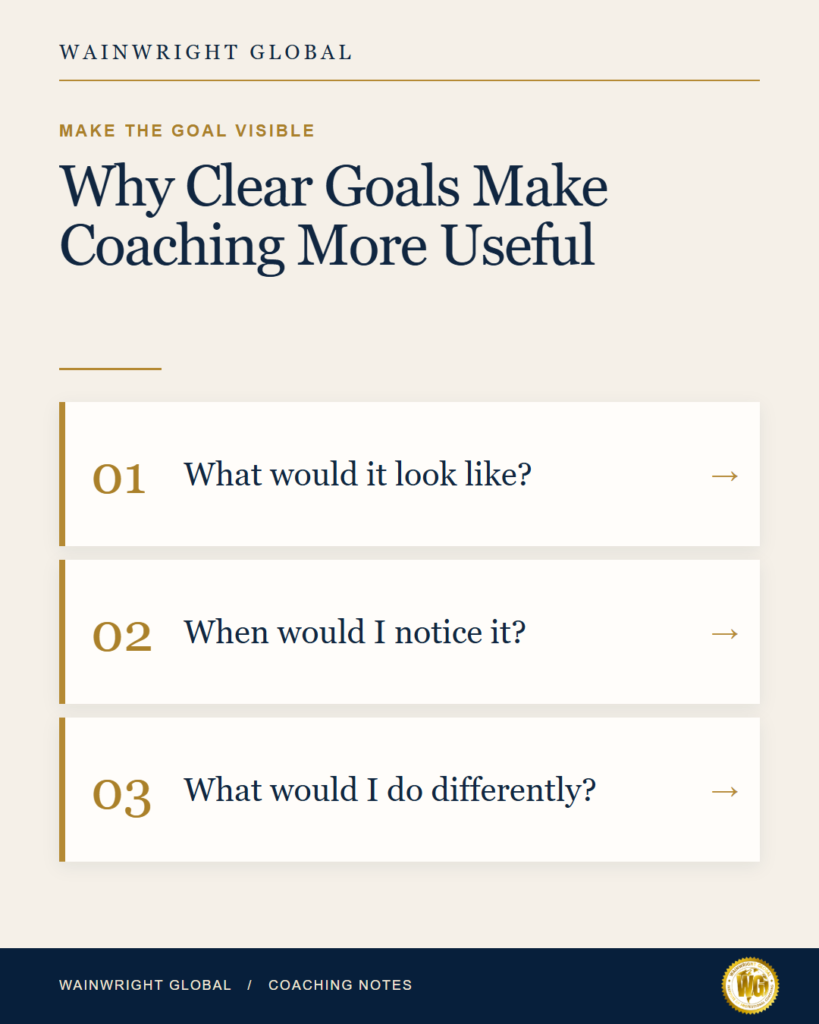
Clear does not have to mean rigid. A goal can start broad, like feeling more confident at work, and become clearer through the conversation. What would more confidence look like? When would you notice it? What would you be doing differently? Questions like these turn a general wish into something more concrete.
This matters because vague goals are hard to act on. If someone wants to be less stressed, it can be difficult to know where to begin. If they want to protect two evenings a week for rest, the next step becomes much easier to see.
Clear goals also make reflection more honest. When the target is specific, it is easier to notice what helped, what got in the way, and what might need to change.
In coaching, the client chooses the goal. The coach’s role is to help them define it clearly enough to work with, and to revisit it as things change.
If you have a goal that feels stuck, try describing what success would actually look like. A little more clarity can make the next step feel far more possible.
Explore coach training at wainwrightglobal.com.