
Motivation feels powerful when it arrives.
It can inspire someone to set a new goal, make an important decision, or finally begin something they have delayed for months. But motivation is also unpredictable. It rises, fades, and often disappears when life becomes difficult.
That is why meaningful change requires more than temporary enthusiasm.
It requires momentum.
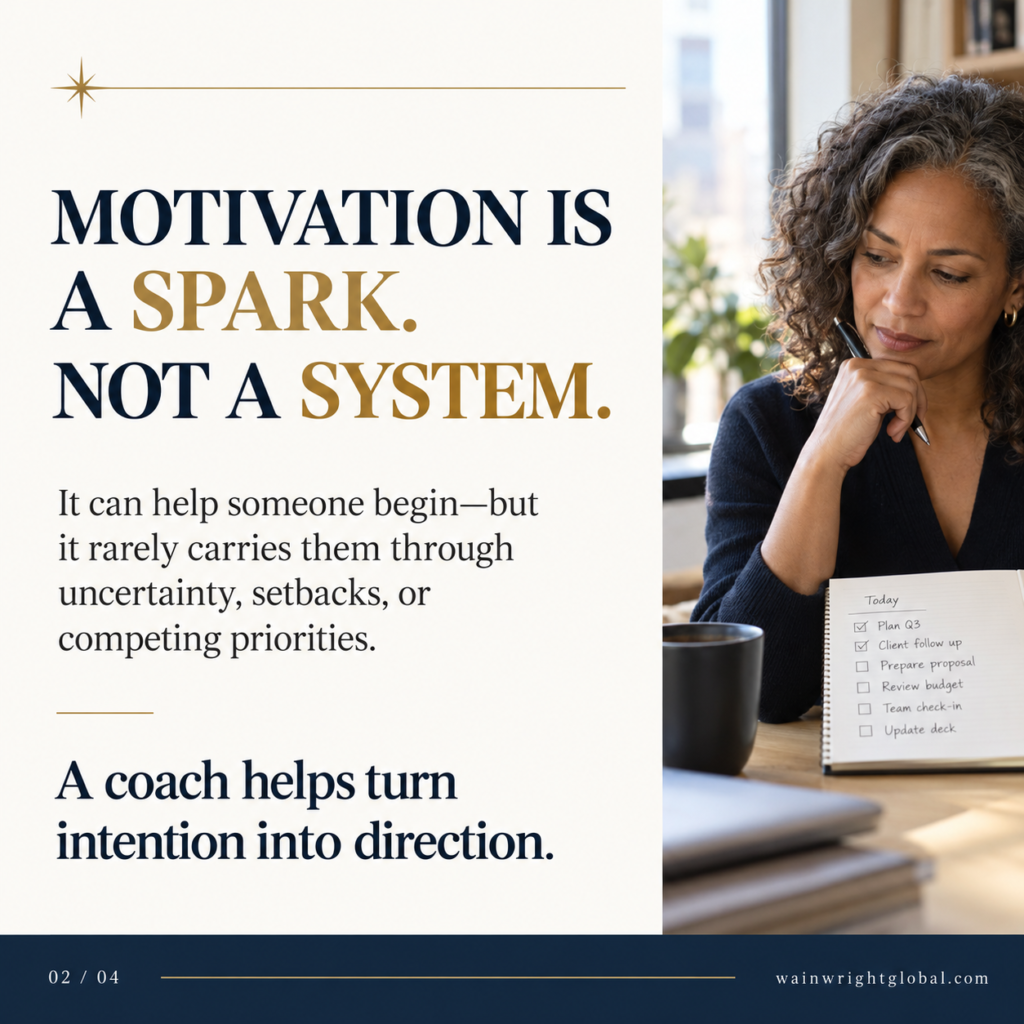
Motivation Is a Spark, Not a System
Most people already know what they want to improve. They may want to change careers, strengthen a relationship, build healthier habits, or finally pursue a long-held dream.
The problem is not always a lack of desire.
Sometimes the goal feels too large. The next step is unclear. Competing priorities take over, and the excitement that started the journey begins to fade.
This is where coaching can make a meaningful difference.
A professional coach does not simply tell someone to try harder or “stay motivated.” Instead, the coach helps the client understand what is getting in the way and create a practical path forward.
What Creates Real Momentum?
Clarity
People struggle to move forward when everything feels equally important.
Coaching helps clients separate distractions from priorities. Through thoughtful questions and reflection, clients can identify what matters most right now.
Clarity turns a vague desire into a focused direction.
Structure
A meaningful goal can still feel overwhelming when there is no plan for reaching it.
Coaches help clients break larger goals into specific, manageable actions. Instead of asking, “How will I accomplish all of this?” the client can focus on one realistic next step.
Structure reduces uncertainty and makes progress easier to begin.
Accountability
Good intentions do not automatically become consistent action.
Accountability creates space for clients to review their commitments, recognize progress, address obstacles, and decide what they will do next. It is not about pressure or judgment. It is about helping clients remain connected to what they said matters.
Over time, those small actions create momentum.
Coaching the Conditions for Change
Great coaching does not make clients dependent on constant encouragement. It helps them develop the clarity, confidence, and self-awareness needed to keep moving—even when motivation is low.
The coach is not responsible for completing the client’s work or making decisions for them. The coach creates a structured conversation where the client can think clearly, take ownership, and choose purposeful action.
That is the difference between temporary inspiration and sustainable progress.
At Wainwright Global Institute of Professional Coaching, aspiring coaches learn practical tools for creating conversations that lead to meaningful change. Our 16-hour certification program is designed to help students develop professional coaching skills they can begin applying immediately.
Your clients may not need another motivational speech.
They may need someone who can help them uncover what matters, identify the next step, and build genuine forward movement.
Learn more at wainwrightglobal.com.