When people imagine a powerful coach, they may picture someone confident, charismatic, and ready with an inspiring answer.
But after years of training professional coaches, I have learned that the most transformative coaching often comes from something quieter.
It comes from presence.
It comes from asking the right question and allowing silence to follow.
It comes from creating a space where another person feels safe enough to think honestly, examine what is holding them back, and discover their own way forward.
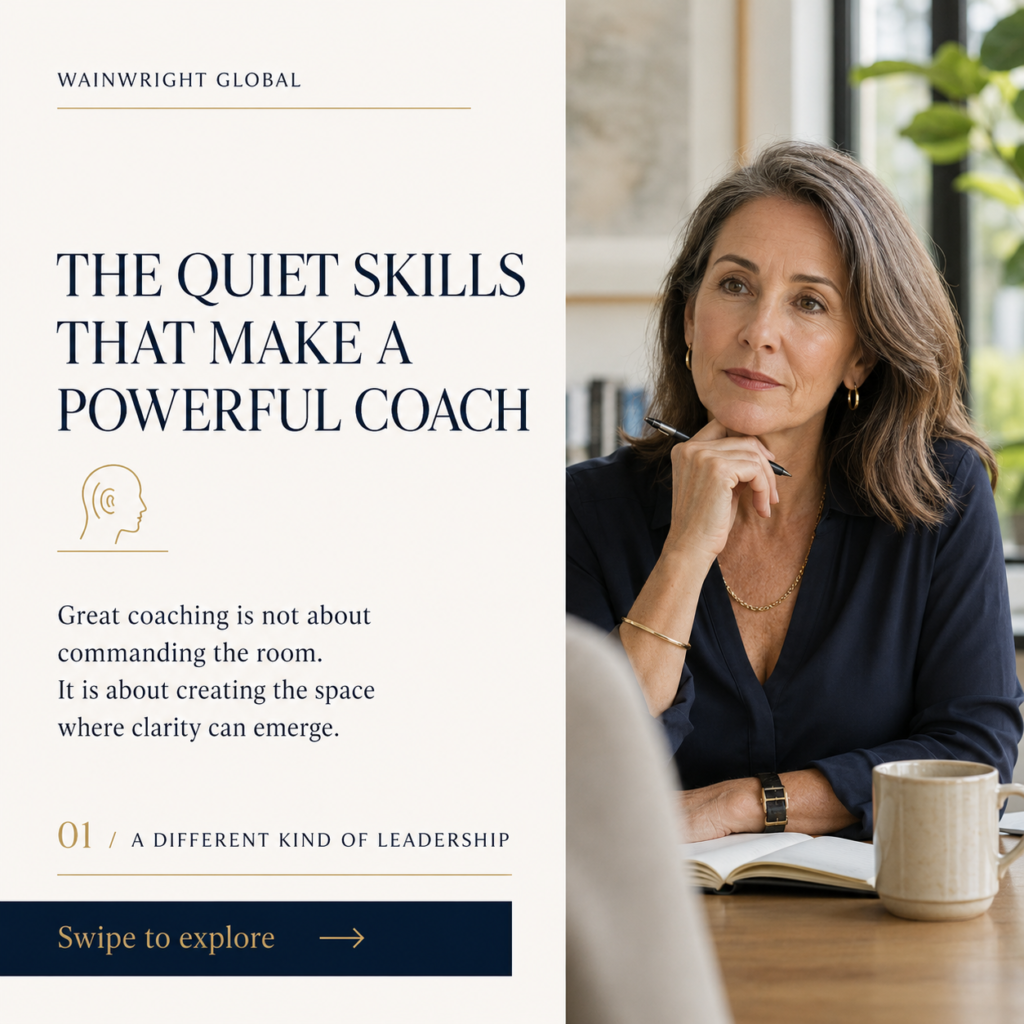
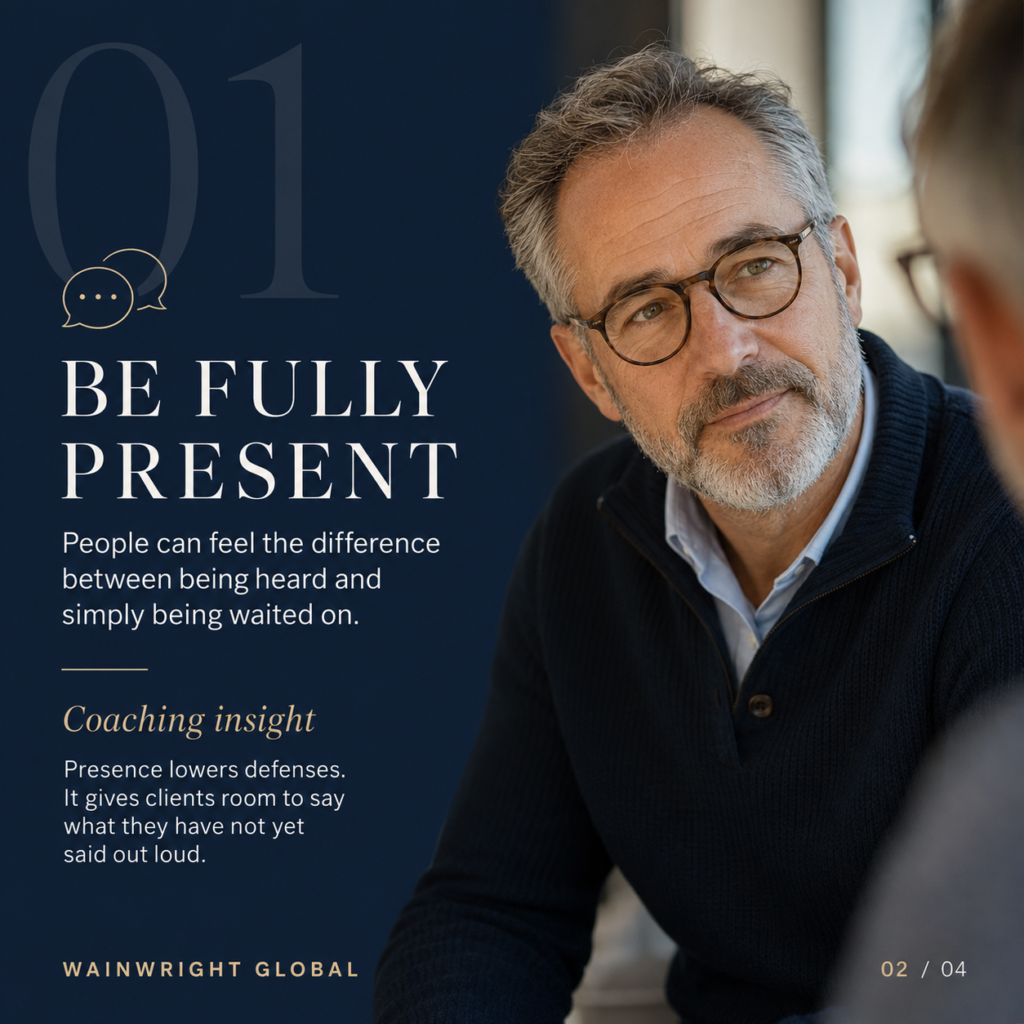
Being Present Is More Powerful Than Being Impressive
Most people can tell when someone is genuinely listening—and when that person is simply waiting for an opportunity to speak.
A coach must learn to be fully present without planning the next response, rushing toward a solution, or making assumptions about what the client needs.
This kind of attention is increasingly rare. Many conversations are interrupted by notifications, competing responsibilities, and the pressure to respond quickly. When someone finally experiences a conversation in which they feel completely heard, something begins to change.
Their defenses soften. Their thoughts become clearer. They may finally say something they have been carrying silently for months or even years.
Presence communicates a powerful message: You have my full attention, and what you are saying matters.
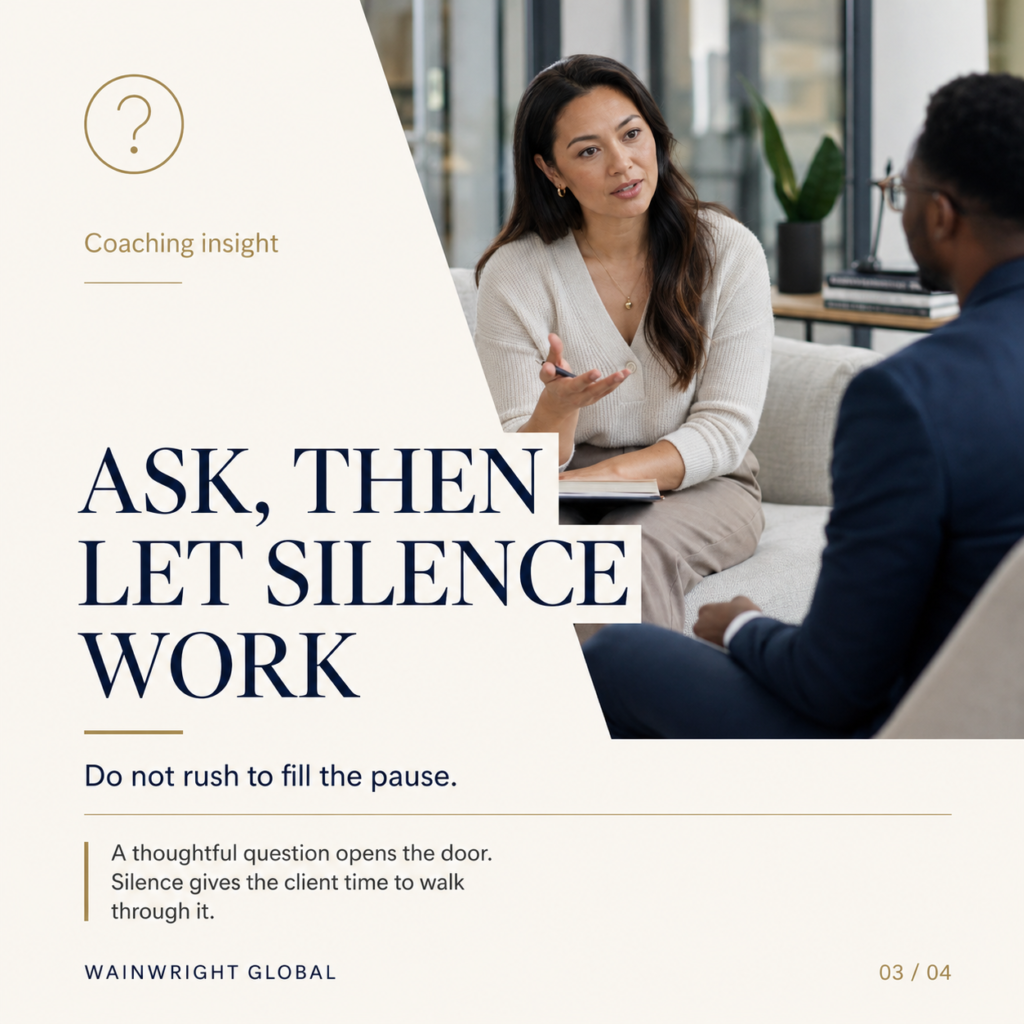
Ask the Question—Then Let Silence Work
New coaches sometimes feel uncomfortable with silence. They may worry that a pause means they have lost control of the conversation or failed to ask the right question.
In reality, silence is often where the most meaningful work begins.
A thoughtful coaching question can invite someone to look beyond their usual explanations. The answer may not appear immediately. The client may need time to sit with the question, notice what comes up, and find the words for an insight that is still forming.
When a coach rushes to fill that pause, the client’s discovery can be interrupted.
A powerful coach learns to trust the silence.
The question opens the door. Silence gives the client time to walk through it.
Coaching Is Not About Having Every Answer
You do not need to be the loudest person in the room to become an effective coach. You also do not need to have a perfect life, know everything, or solve every problem placed before you.
Coaching is not about proving how much you know. It is about helping another person access what they already know, recognize what they truly want, and take meaningful action.
That requires humility.
Instead of saying, “Here is what you should do,” a coach might ask:
- What would become possible if you stopped doubting yourself?
- What are you avoiding because the next step feels uncomfortable?
- What matters most to you in this situation?
- What would progress look like this week?
- What do you already know that you have not yet acted upon?
These questions do not take power away from the client. They return it.

Quiet Does Not Mean Passive
Listening deeply does not mean sitting back and doing nothing. Professional coaching requires focus, courage, discernment, and skill.
A coach must notice patterns, challenge limiting assumptions, reflect what the client may not yet recognize, and help turn insight into action. The difference is that this work is performed in service of the client—not the coach’s ego.
Quiet coaching skills can produce powerful results because they help people hear their own thoughts more clearly.
That clarity can lead to better decisions, stronger confidence, healthier boundaries, meaningful goals, and lasting personal change.
You May Already Have the Foundation
Perhaps people naturally come to you when they need someone to listen. Maybe you are known for asking thoughtful questions or helping others see a situation differently.
Those qualities may be the beginning of something meaningful.
Professional coach training helps transform natural ability and life experience into a practical, ethical, and repeatable coaching process. It teaches you how to listen with intention, ask questions that create insight, maintain appropriate boundaries, and help clients move forward with greater clarity.
At Wainwright Global Institute of Professional Coaching, we have helped more than 6,600 people develop these skills since 2006 through our graduate-level accredited curriculum.
You do not need to become the loudest voice.
You can become the person who helps others hear their own.
Learn more about becoming a Certified Professional Coach at wainwrightglobal.com.