When someone feels uncertain, the easiest response is often to tell them what to do.
Advice can be helpful in the moment, but it does not always prepare someone to face the next challenge independently. If people continually look outside themselves for answers, they may never develop confidence in their own judgment.
Professional coaching takes a different approach.
A great coach does not try to become the most important voice in a client’s life. The coach helps the client hear and trust their own voice more clearly.
Coaching Is Not About Having All the Answers
Many aspiring coaches believe they must know exactly what every client should do. That belief can make coaching feel intimidating—especially when clients bring complex decisions, unfamiliar circumstances, or deeply personal goals into the conversation.
However, professional coaches are not expected to solve every problem.
Their role is to create a thoughtful process in which clients can explore their situation, recognize patterns, consider new possibilities, and decide what action feels right for them.
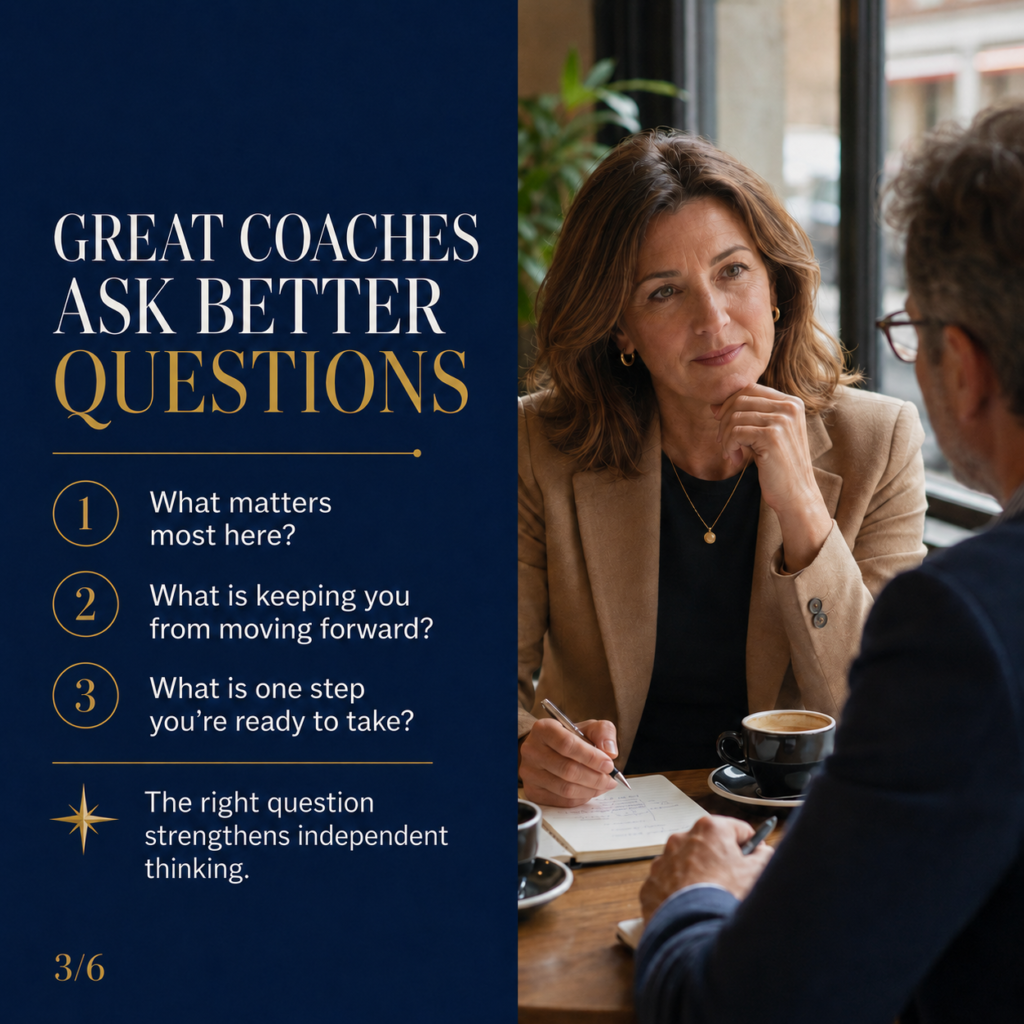
Instead of saying, “Here is what you should do,” a coach might ask:
What matters most to you in this decision?
What is keeping you from moving forward?
Which option is most aligned with the future you want?
What would you choose if fear were not making the decision?
What is one step you are prepared to take now?
These questions do more than produce an answer. They strengthen the client’s ability to think independently.
Confidence Grows Through Better Decisions
Clients often begin coaching because they feel stuck, overwhelmed, or unsure of themselves. They may have spent years second-guessing their choices or allowing other people’s expectations to determine their direction.
A coach provides a supportive space where clients can slow down and examine what they genuinely want.
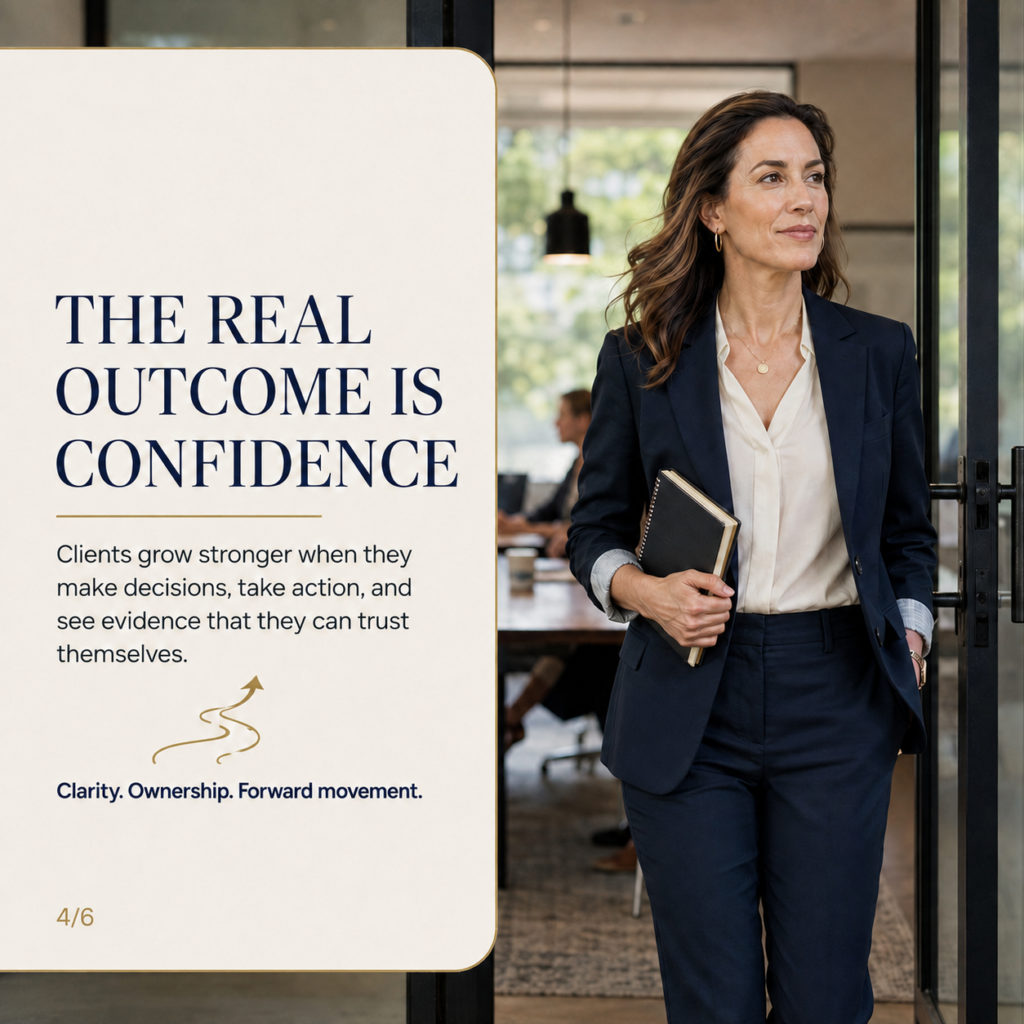
As clients make decisions and follow through on meaningful actions, they begin gathering evidence that they can trust themselves. Their confidence is no longer based only on encouragement from someone else. It is built through experience.
Over time, clients may become more capable of navigating difficult conversations, setting boundaries, evaluating opportunities, and responding to setbacks without immediately needing someone else to tell them what to do.
That independence is one of the most valuable outcomes coaching can create.
Accountability Without Dependence
Accountability is an important part of coaching, but it should not make clients feel incapable of moving forward without their coach.
Healthy accountability helps clients take ownership of their commitments. The coach is there to ask questions, encourage reflection, and help the client understand what happened when an action was—or was not—completed.
The purpose is not to pressure the client or manage their life for them. It is to help them develop greater awareness and personal responsibility.
Professional coach training teaches aspiring coaches how to provide this support while maintaining appropriate boundaries. It helps them distinguish between guiding a productive conversation and taking control of a client’s decisions.
The Best Measure of Coaching
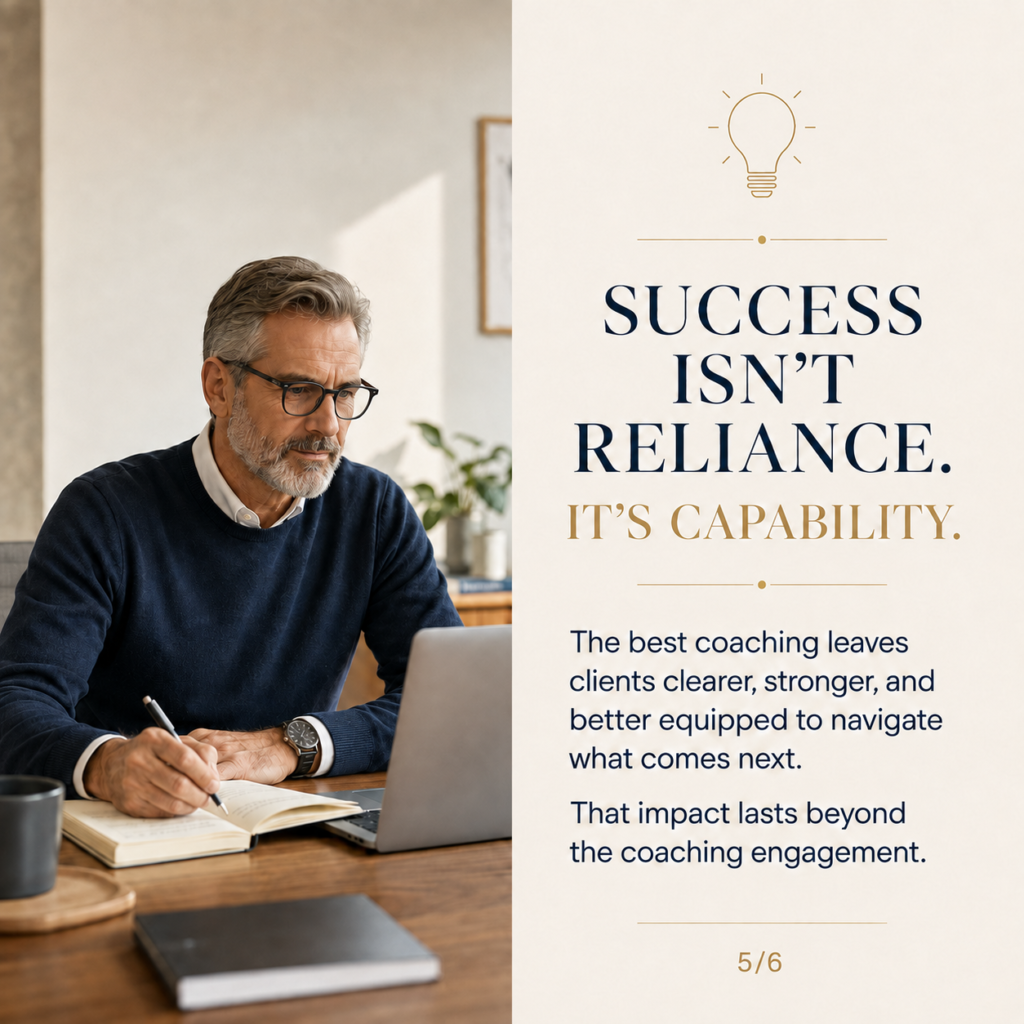
A successful coaching relationship is not measured by how often a client asks for direction.
It is measured by how much stronger, clearer, and more capable the client becomes.
Great coaches help people develop tools they can continue using long after a coaching engagement ends. Clients learn how to ask themselves better questions, challenge limiting assumptions, and take purposeful action even when the path ahead is uncertain.
The coach’s impact remains—not because the client has become dependent on the coach, but because the client has become more confident in themselves.
Learn to Coach for Lasting Change
If people already turn to you when they need support, professional coach training can help you serve them more effectively.
At Wainwright Global Institute of Professional Coaching, aspiring coaches learn practical skills for facilitating meaningful conversations, encouraging accountability, and helping clients create sustainable progress.
The goal is not to become the person with every answer.
It is to become the person who helps others discover that they are more capable than they realized.
Learn more about becoming a Certified Professional Coach at wainwrightglobal.com.