
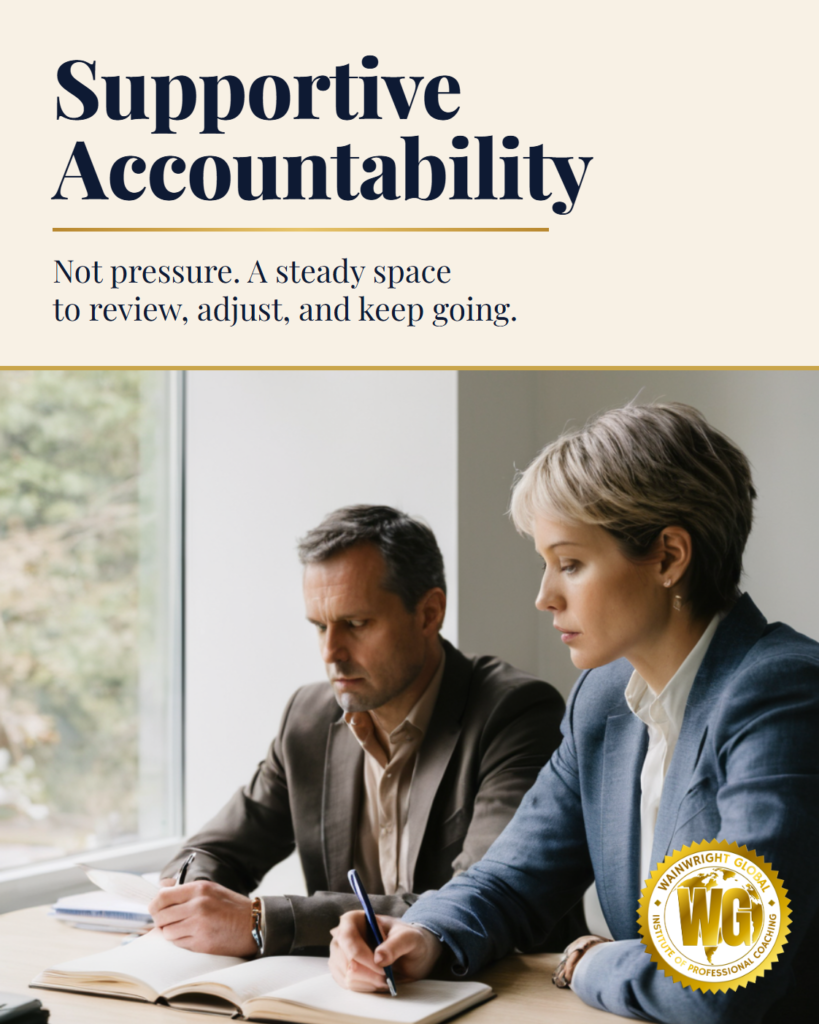
Accountability is often misunderstood. Some people think it means pressure, criticism, or someone checking whether they failed. In coaching, accountability can be much more thoughtful than that.
Supportive accountability helps a person stay connected to the commitment they chose for themselves. It is not about forcing action. It is about helping someone remember what matters, notice what gets in the way, and adjust the plan when needed.
For example, someone may set a goal to spend time each week working on a professional development plan. A coach might ask what made that goal important, what could interrupt it, and how the person wants to respond if the week becomes busy. At the next conversation, the coach can help them review what happened without judgment.
That review is where learning often begins. If the person followed through, they can notice what supported the action. If they did not, they can explore whether the goal was too broad, the timing was unrealistic, or another priority needed attention.
This is one reason coaching can be useful. It creates a structured space where people can make commitments, reflect honestly, and keep moving with greater awareness.
Supportive accountability does not remove responsibility. It strengthens it. The person remains the one making choices, taking action, and learning from the results. The coach helps hold the conversation steady enough for reflection and progress to continue.
When accountability is respectful, it can reduce avoidance and increase clarity. It reminds people that growth is not about being perfect. It is about staying engaged with what they said mattered and choosing the next step with intention.
Explore coach training at wainwrightglobal.com.