

When people imagine becoming a life coach, they often think about asking powerful questions, listening deeply, and helping others create meaningful change.
Those skills matter. But there is another essential coaching skill that receives far less attention: maintaining healthy professional boundaries.
Great coaches care deeply about their clients. They celebrate their progress, provide encouragement, and create a safe space for honest conversations. But caring about someone does not mean carrying the responsibility for their choices.
A coach supports the client’s journey without taking control of it.

Boundaries Build Trust
Some people worry that boundaries will make a coaching relationship feel distant or impersonal. In reality, clear boundaries make the relationship safer and more productive.
Clients need to understand what they can expect from their coach, how the coaching process works, and where the coach’s role begins and ends. When those expectations are clear, clients can speak more openly and take greater ownership of their progress.
Boundaries also help distinguish coaching from consulting, mentoring, counseling, and therapy. A trained professional coach understands when coaching is appropriate—and when a client may benefit from another type of support.
Knowing when to refer someone is not a failure. It is an important part of serving clients responsibly.
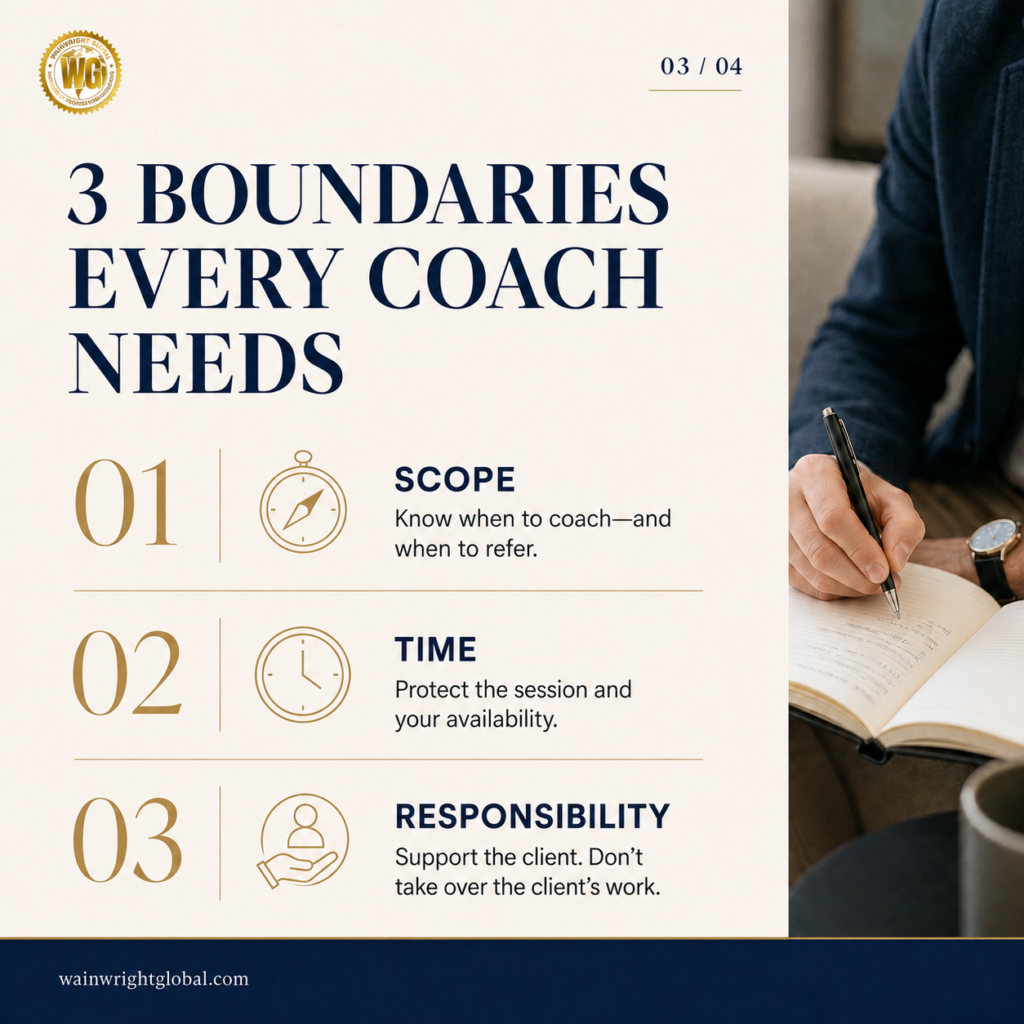
Three Boundaries Every Coach Needs
1. Scope
A coach must understand the scope of the coaching relationship.
Coaches help clients clarify goals, explore possibilities, recognize patterns, and create action plans. They do not diagnose conditions, provide therapy, or make decisions on behalf of the client.
Remaining within the proper scope protects both the coach and the client.
2. Time
Healthy coaching relationships also require clear boundaries around time and availability.
Sessions should have established starting and ending times. Communication between sessions should follow mutually understood guidelines. Coaches must also protect their personal time so they can remain focused, present, and effective.
Being constantly available does not make someone a better coach. Sustainable coaching requires space to rest, reflect, and prepare.
3. Responsibility
Perhaps the most important boundary is understanding who owns the client’s results.
A coach can ask questions, offer support, provide accountability, and help a client see new possibilities. However, the client must choose what actions to take.
The coach does not do the client’s work for them.
This distinction encourages independence rather than dependence. The goal of coaching is not to become indispensable. It is to help clients trust themselves, make intentional decisions, and continue moving forward.
Boundaries Make Coaching More Human
Strong boundaries do not reduce compassion. They allow compassion to exist without exhaustion, confusion, or unhealthy responsibility.
Throughout my years of training professional coaches, I have seen how much confidence comes from understanding the coaching process clearly. When coaches know how to establish expectations, remain within their scope, and protect the client’s autonomy, they can focus on what they do best: creating conversations that lead to clarity and meaningful change.
Professional coaching requires both heart and structure.
At Wainwright Global Institute of Professional Coaching, we teach aspiring coaches the practical skills needed to create ethical, effective, and sustainable coaching relationships. Our 16-hour professional coach certification gives students tools they can begin applying immediately.
Care deeply. Coach professionally.
Learn more at wainwrightglobal.com.