Have you ever known what you wanted to do, only to ask several other people what they thought before trusting yourself?
Most of us have.
We turn to friends, family members, colleagues, and online advice for reassurance. While another perspective can be helpful, constantly relying on outside opinions can make our own voice harder to hear.
Eventually, the question changes from “What do I want?” to “What does everyone else think I should do?”
This is one of the areas where coaching can be incredibly valuable.
A Coach Does Not Make the Decision for You
Some people assume that a coach’s role is to give advice or provide the correct answer. Professional coaching works differently.
A coach does not take control of the client’s choices. Instead, the coach creates a supportive space where the client can slow down, think clearly, and understand what is influencing the decision.
The conversation may explore questions such as:
- What matters most to you?
- Which expectations are influencing your choice?
- What are you afraid might happen?
- What would you choose if you did not need anyone else’s approval?
- Which option best reflects the life you want to create?
These questions are not designed to lead clients toward the coach’s preferred answer. They help clients uncover their own.
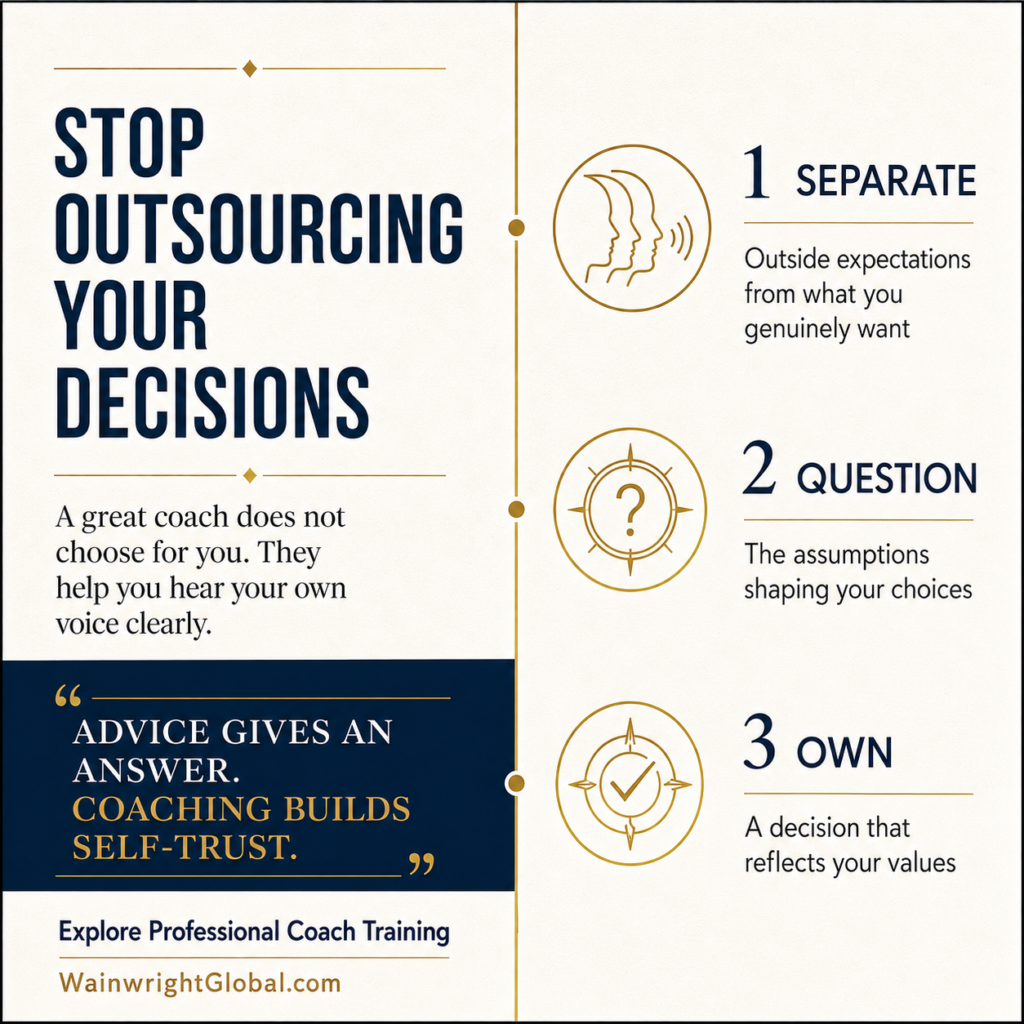
Separate Your Voice From Outside Expectations
Many decisions are shaped by expectations we have carried for years.
We may believe we must follow a particular career path, remain in an unfulfilling situation, or keep saying yes because disappointing someone feels uncomfortable. These beliefs can become so familiar that we stop questioning whether they still belong in our lives.
A skilled coach helps clients examine those influences without judgment.
The goal is not to ignore every outside opinion. It is to recognize the difference between helpful guidance and pressure that pulls someone away from their own values.
Once that difference becomes clear, decision-making often becomes less overwhelming.
Question the Assumptions Behind the Choice
Sometimes the obstacle is not the decision itself. It is the assumption underneath it.
A person may assume it is too late to change careers, that setting a boundary is selfish, or that uncertainty means they are making the wrong choice.
Coaching brings those assumptions into the conversation.
Are they true? Where did they come from? Are they still useful? What might become possible if the client stopped treating them as facts?
A powerful coaching question can help someone see an option they previously dismissed—or realize that the fear surrounding a decision does not necessarily mean the decision is wrong.
Make a Decision You Can Own
Advice may offer temporary relief, but it can also transfer responsibility to someone else.
When a decision becomes difficult, it is tempting to say, “I only did it because they told me to.”
Coaching encourages ownership.
The client considers the possibilities, identifies what matters, evaluates the consequences, and chooses the next step. Even when the outcome is uncertain, the decision belongs to them.
That ownership is where self-trust begins to grow.
Coaching Builds Independence
A successful coaching relationship should not make clients dependent on their coach. It should help them become more resourceful, self-aware, and confident in their own ability to move forward.
Throughout my years of training professional coaches, I have seen the transformation that happens when someone stops searching for permission and starts trusting their own judgment.
They may not suddenly have every answer. But they become better equipped to ask themselves the right questions.
That ability extends far beyond one coaching conversation. It can influence careers, relationships, leadership, and the many everyday choices that shape a life.
Advice gives someone an answer.
Coaching helps them develop the clarity and self-trust to find their own.
If helping people reconnect with their voice and make intentional decisions feels meaningful to you, professional coaching may be a path worth exploring.
Learn more about becoming a certified professional coach at www.wainwrightglobal.com.